Portrait photography hinges on controlling lighting. V-flats are a simple tool for modifying and shaping light to flatter subjects. Using V-flats for portraits allows photographers to bounce and subtract light in flattering ways. This guide shows how to create beautiful light on your subjects using V-flats as modifiers.
This post may contain affiliate links, meaning I get a commission if you decide to make a purchase through my links at no cost to you. Please read my disclosure for more info.
Key Takeaways
- V-flats are professional grade light shaping tools that can be used to augment natural light or control studio strobes.
- Main uses: Bounce light to soften shadows, create negative fill for contrast/drama, flag to block/spill light, and serve as quick black/white backgrounds.
- Easy to acquire: Buy turn key v-flats online or make DIY v-flats with foam core and gaffers tape.
- Alternatives: Collapsible backgrounds for portability, seamless paper for wider coverage in groups, polystyrene from a hardware store if you can’t find foam core in your area.
Why You Should Use V-Flats And Where To Get Them
V-flats are an essential tool for controlling light, especially when crafting portraits. Typically, they consist of two 4′ x 8′ foam core boards (black on one side and white on the other) and are taped together with gaffers tape. This tape acts like a hinge, allowing them to stand upright by themselves like an open book.
The reason V-flats are white on one side and black on the other is to provide versatility in controlling light and shadows. This simple, yet effective design allows you to add fill to shadows, make shadows deeper or even flag or redirect light from strobes or ambient light.
The easiest way to acquire V-flats is to order the foldable ones online. If you’re on a budget, you can build a DIY set by sourcing foam core boards from a local film supplier or polystyrene from the hardware store (more on that later).
Turn Key V-Flats
Ways to Use V-Flats For Portraits
There are 4 main ways I use v-flats for portraits to modify the light on my subjects:
- Bounce light: Use them as a way to fill shadows.
- Subtract light: Use them to make shadows darker.
- Flag: Use them to block or scrim the light.
- Background: use them as an easy black or white background.
Bounce Light With the White Side
The white side of a V-flat is perfect for bouncing light, creating fill light to lift shadows. In my experience, this technique softens harsh shadows in portraits, ensuring a more flattering and evenly lit subject.
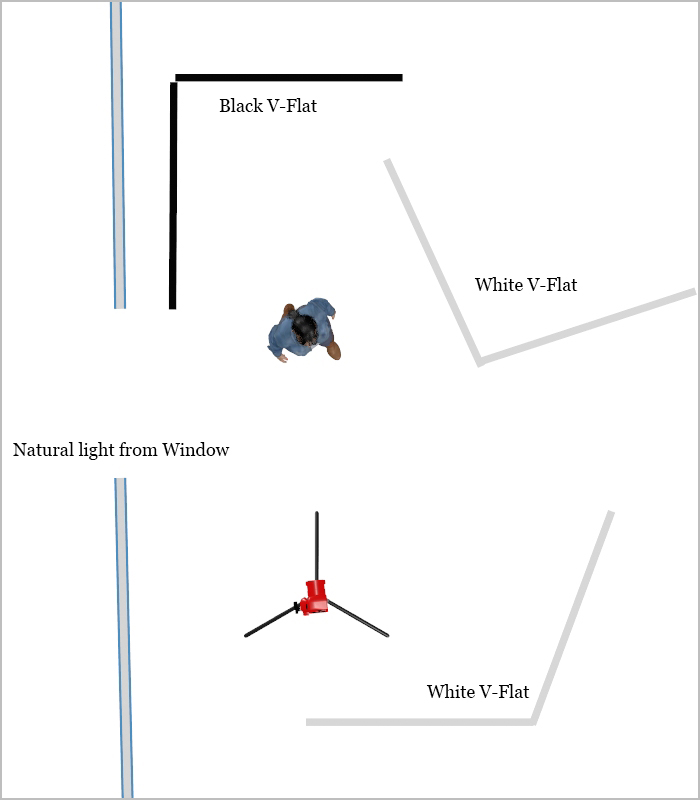
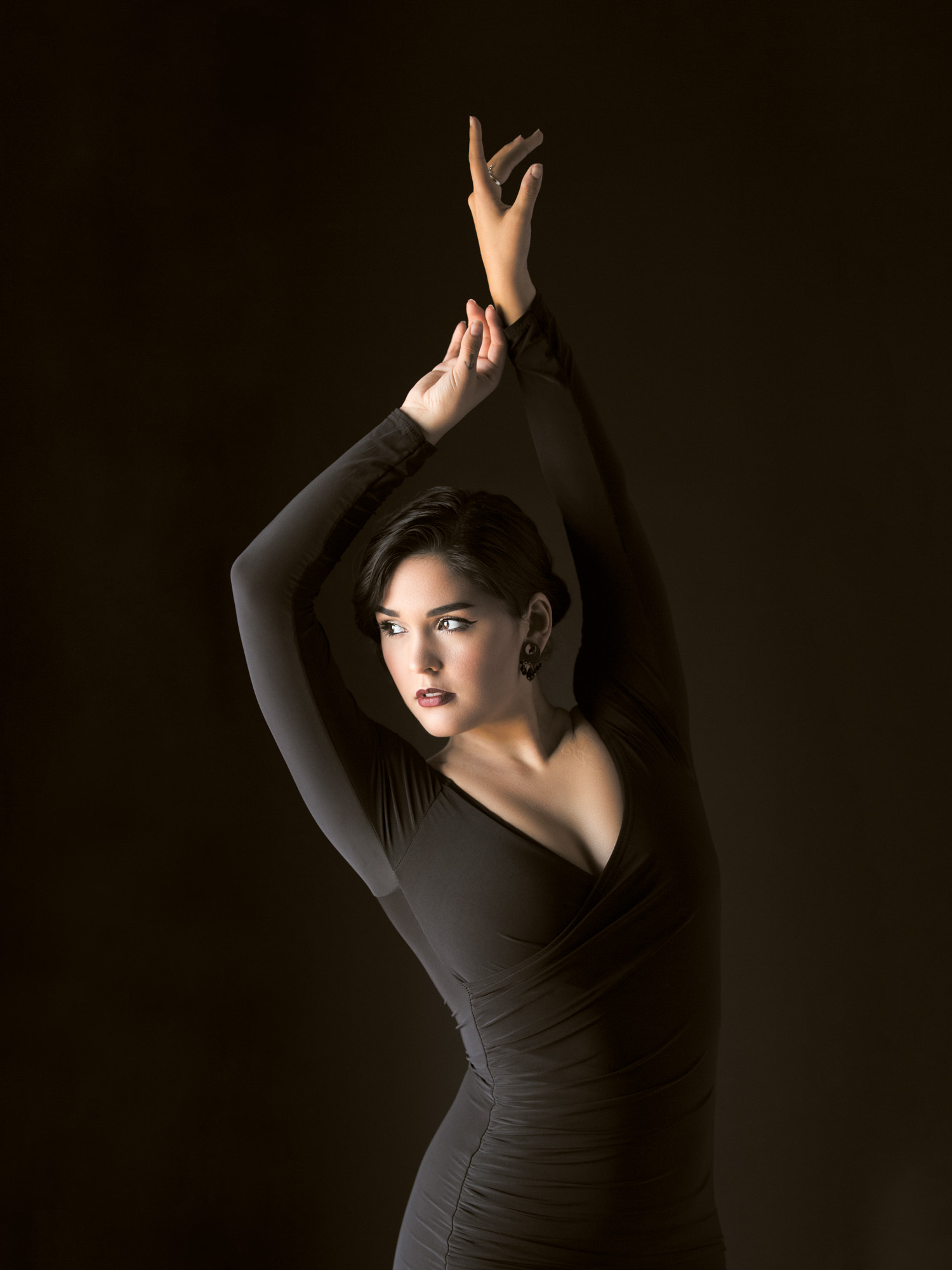
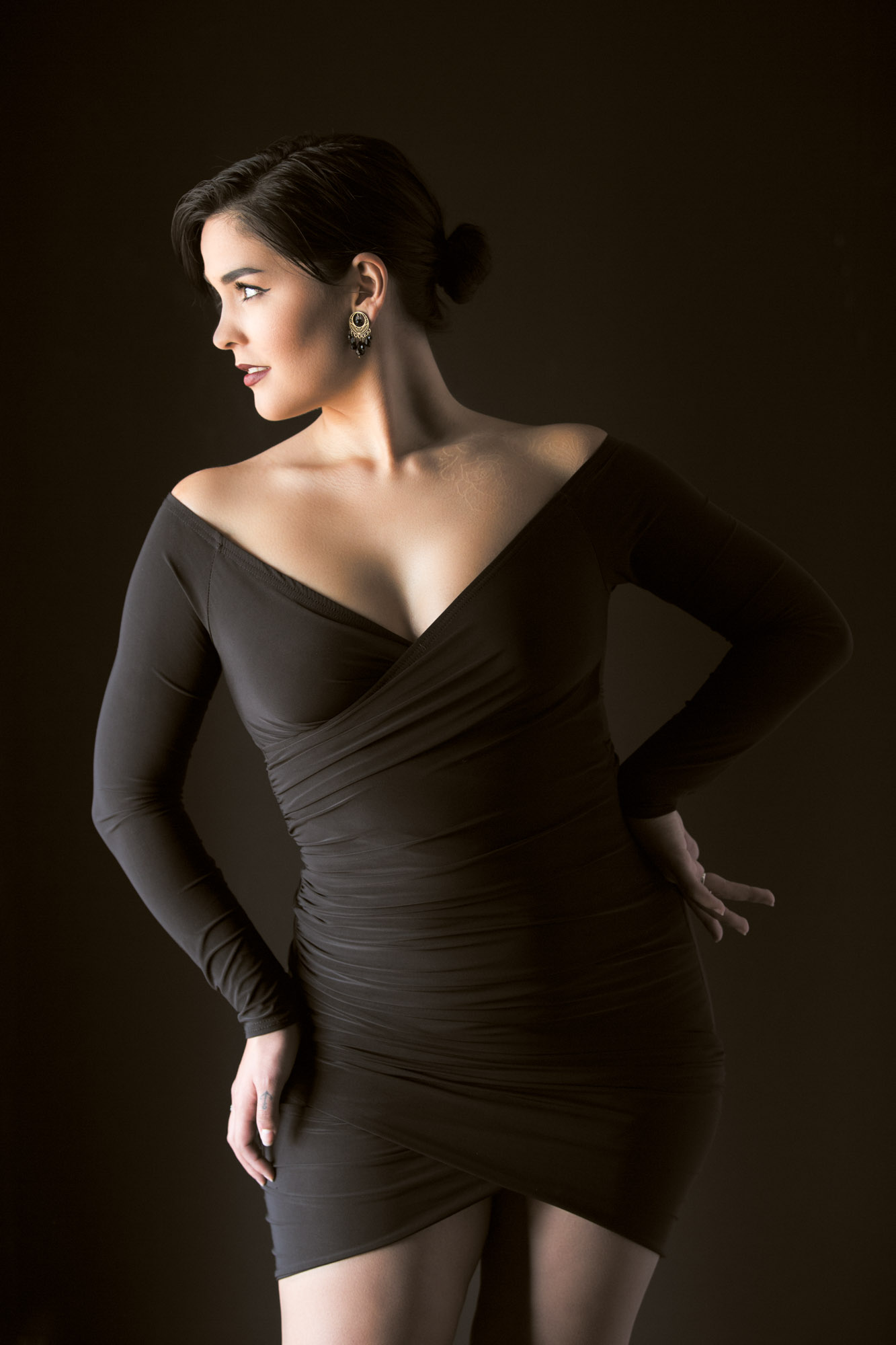
In the following photos, I used only V-flats and natural light. For the backdrop, I chose a black V-flat for a deep, uniform background. To the right and slightly behind my subject, another V-flat bounced natural light as a rim light, creating a subtle outline that separated her from the background and added dimension.
In front of her, another V-flat reflected natural light onto her face and body. This setup lifted shadows and softened the overall look, balancing light and shadow to highlight features naturally.
Create Negative Fill Contrast With The Black Side
Conversely, the black side acts as negative fill, absorbing light to deepen shadows and enhance contrast. This is effective for adding drama or mood to portraits, especially in high-ambient-light locations. It’s also great for sculpting facial features or emphasizing texture.
For the following portrait, I used two black V-flats on either side of my subject to accentuate light falloff from my key light. By creating a tunnel effect, I achieved high-contrast shadows on a bright white background, adding depth and an edgy aesthetic.
Use as a Flag for Light Control
V-flats also serve as versatile flags, blocking or controlling light from strobes or ambient sources. This is crucial for preventing light spill or guiding light precisely in portraits. Using V-flats for portraits in this way enhances subject lighting and maintains consistent quality throughout the shoot.
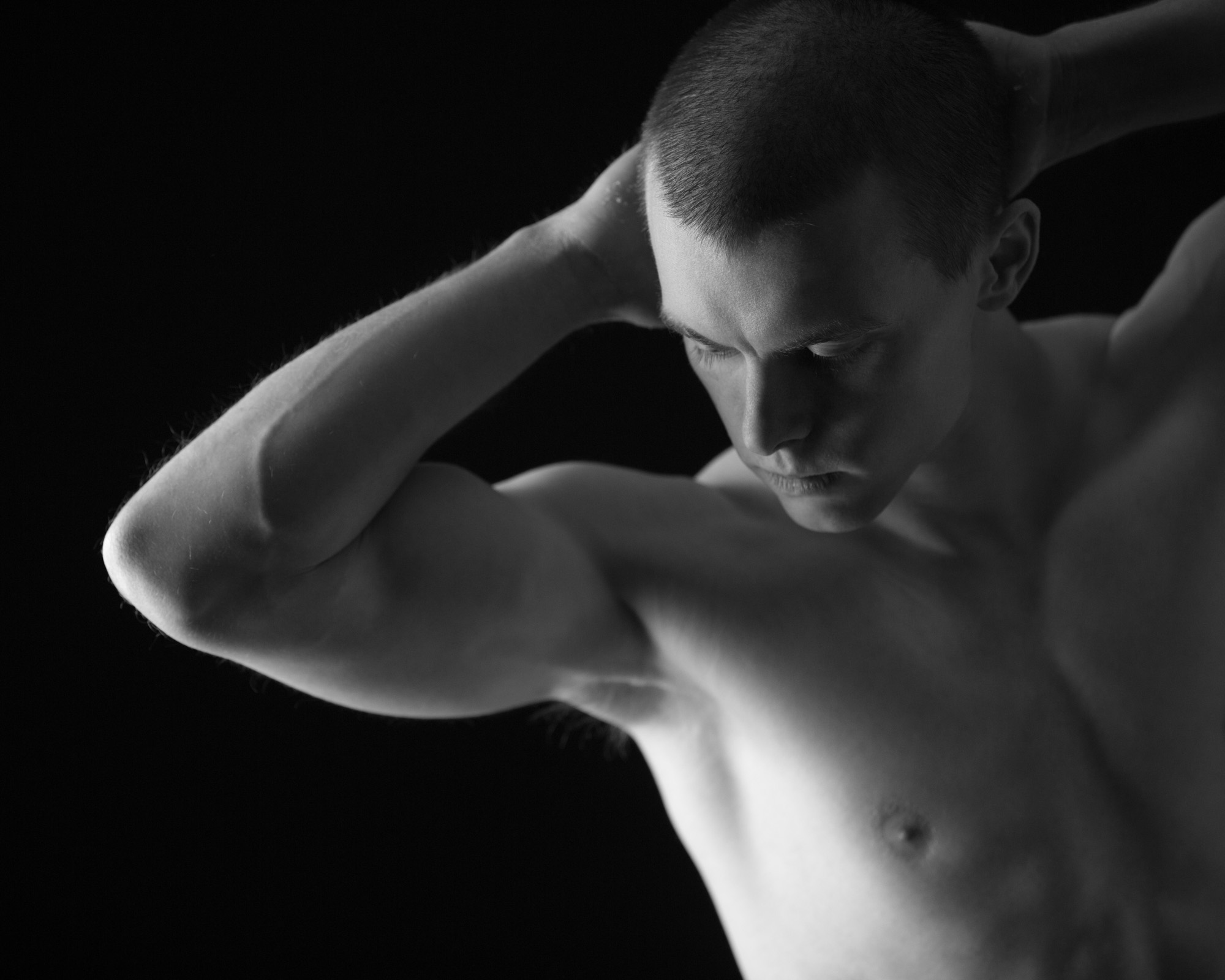
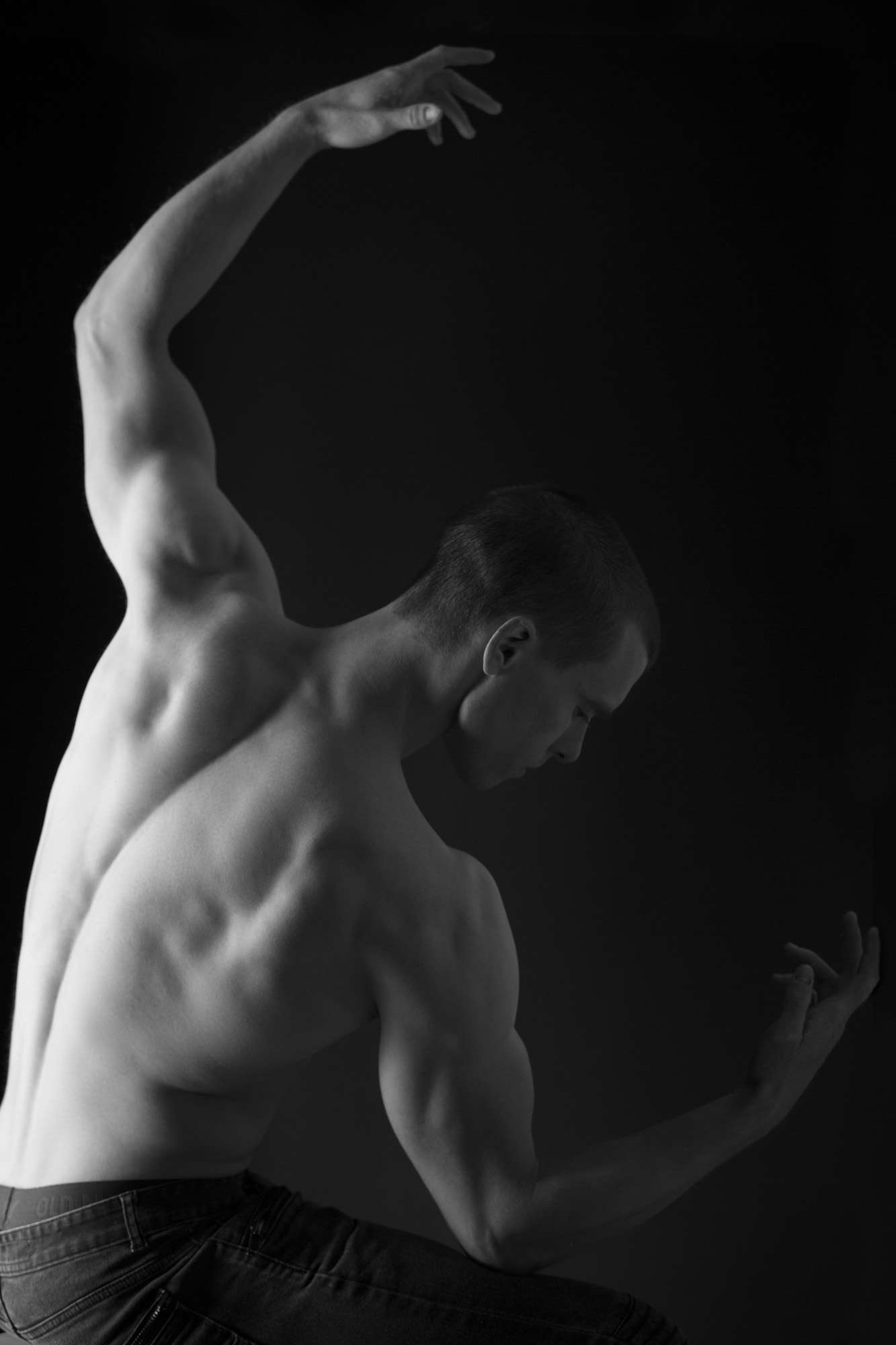
For the following shot, I used natural window light but flagged the oversized window with two black V-flats to create a strip of light like a strip box. On the opposite side, a white V-flat bounced subtle rim light onto his back to accentuate muscles.
Use as a Background
V-flats can double as simple, effective backgrounds for portraits. Whether needing a pristine white or deep black backdrop, V-flats offer a quick solution without setting up seamless paper. This setup creates varied looks in tight spaces, providing a clean, uncluttered backdrop that keeps focus on the subject.
How To Make DIY Foam Core V-Flats for Portraits
Creating your own V-flats using 3/16″ black-and-white foam core from a film supply store is a cheaper alternative to buying pre-made ones online. However, finding large 4′x8′ panels online for shipping is difficult.
You can find smaller ones online, as in the following video, but making DIY V-flats for portraits involves more work than most realize. That said, you can also make them stronger and more durable if you build them yourself.
V-flat Alternatives
When considering alternatives to traditional V-flats for portraits, weigh pros and cons based on needs and budget. Options range from durable professional setups to affordable DIY solutions. Whether seeking easier transport, wider backdrops, or cost savings, there’s a fit for every photographer.
1. Collapsible Backgrounds
Collapsible backgrounds like these can function similarly to V-flats:
Using any of these backgrounds with a C-stand (B&H) and reflector holder (B&H) will make things much easier for you. Although this set-up might be a higher initial investment, I find these are easier to transport and more durable than V-flats.
If you’re shooting from your own portrait studio, and you have the space, I’d forgo these collapsible backgrounds in favor of V-flats because they’re easier to adjust during photo shoots.
2. Seamless Paper Options
Using black or white seamless paper (B&H) mounted on C-stands (B&H) with a background holder (B&H) can be an excellent choice if you need to control the light for a large family portrait.
The main advantage of seamless paper is that you can make them very wide when compared to V-flats. However, they’re slower to set up and really hard to maneuver around.
I’d only do this if I needed to control the light in a large area for an editorial grade group portrait.
3. Polystyrene DIY V-Flats
Lastly, utilizing polystyrene (Lowe’s) from hardware stores is a practical and easily accessible option in place of foam core. These materials are great for crafting V-flats, especially in areas where specialized photography suppliers aren’t readily available.
The trade-off is in their bulkier size and the extra effort required to paint one side black and the other white. These two things make them a poor choice if you want to bring them on location for your shoots or if you’re short on time to make them.